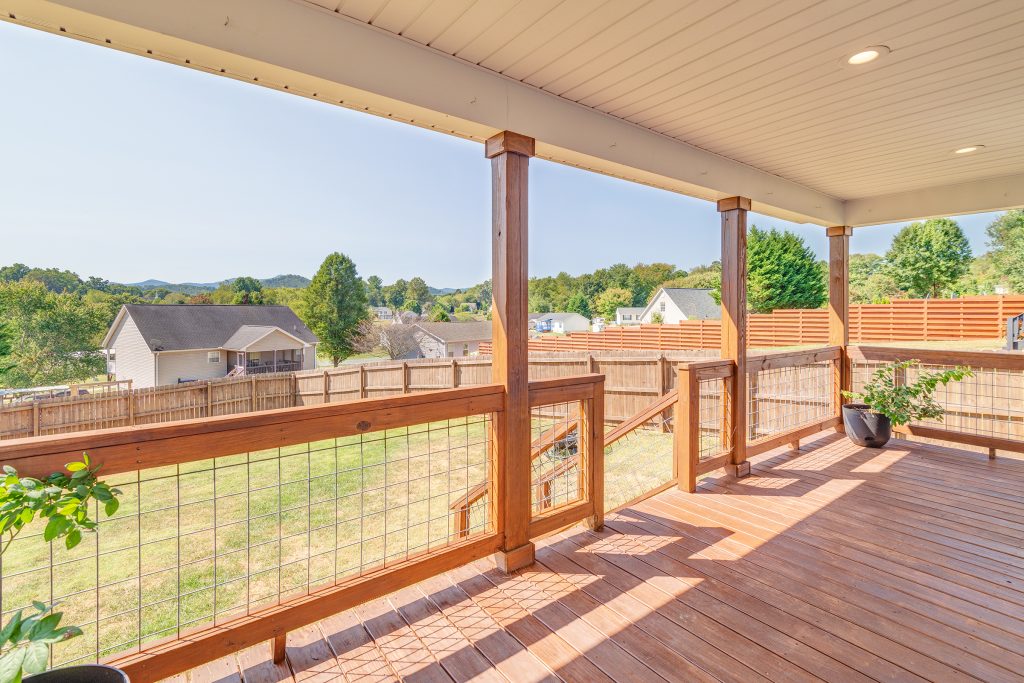
“Fences make good neighbors,” but before putting up a new fence, it’s always wise to have a surveyor clearly mark your property lines. A good rule of thumb is to place your fence several inches inside your boundary so there can be no question about where the fence—and your property—ends. In fact, my own fence was set back two feet from my property line.
Recently, a friend asked me about a situation with a new neighbor who wanted to tie into her existing fence. Was it a bad idea to allow this?
If your fence is only four inches inside your property line, the answer might be, “Maybe.” But in her case, the fence sits FIFTEEN feet inside her property line. My answer was a definite NO. Why? For one thing, there are trees behind her fence that she would no longer have easy access to. Who would be responsible for caring for those trees? What happens if the new neighbors decide the trees need to be removed and believe they have the right to do so?
There’s another concern, too. If the neighbors tie their fence into hers, future surveys would show that their fence is encroaching onto her property. That could potentially create complications with the property’s title and even raise questions about title insurance.
An attorney may be the best person to answer the legal questions, but in this case, my advice was simple: Don’t do it. Before you share or connect a fence, make sure you know exactly where your property ends—and where your neighbor’s begins. A little caution up front can prevent a lot of headaches down the road.